(1).jpg)
Snails Offer New Model for Eye Regeneration Research, Opening Doors for Vision Restoration Therapies
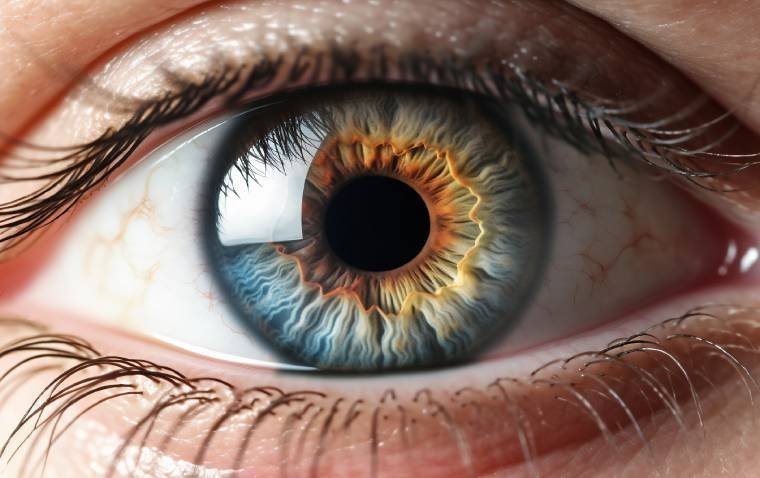
The apple snail (Pomacea canaliculata) has emerged as a promising new model for studying eye regeneration, thanks to research conducted at the Stowers Institute for Medical Research. Unlike human eyes, which cannot regenerate after severe injury, the apple snail’s complex camera-type eyes, strikingly similar in structure to human eyes, can fully regrow after injury or even complete amputation.
This groundbreaking work, led by Stowers President and Chief Scientific Officer Alejandro Sánchez Alvarado, PhD, and published in Nature Communications, could provide new insights for developing treatments for human eye diseases such as macular degeneration.
Establishing a Regeneration Model with Genetic Tools
Former Postdoctoral Research Associate Alice Accorsi, PhD, now an Assistant Professor at the University of California, Davis, led the team in confirming the apple snail’s anatomical similarities to vertebrate eyes, including the presence of a lens, cornea, and retina. The team also developed genetic tools for this species, creating stable gene variations to better understand the mechanisms of eye regeneration.
“Our eyes are extremely important for perceiving our environment, yet when damaged are unable to recover,” said Accorsi. Sánchez Alvarado added, “Nature has answers for us. We now have a tractable system for investigating which genes are responsible for camera-type eye regeneration.”
Four Stages of Snail Eye Regeneration
The study describes a four-stage regenerative process taking place over 28 days:
1. Wound healing
2. Formation of a specialized cell mass
3. Emergence of a lens and retina
4. Maturation of all eye components
While vertebrates, including humans, can only complete the first stage, the research aims to identify the genetic "switch" that allows snails to restart full eye development.
Role of the pax6 Gene in Eye Development
One of the most significant findings was the presence of the pax6 gene in apple snails, a gene already known to be essential for eye development in vertebrates and fruit flies. Using CRISPR-Cas9 gene editing, the team disrupted pax6 function, producing healthy snails that were notably missing their eyes.
Accorsi described two pivotal moments: “The first was discovering that the snail eye was just like a human eye. The second was observing tiny embryos without eyes after disrupting pax6, realizing we can use snails to understand gene function.”
A Platform for Genetic and Regenerative Research
Sánchez Alvarado emphasized the significance of combining a regenerative model with genetic capability: “This is among the first efforts in the history of science to gain a mechanistic understanding of how a sensory organ as complex as the eye can be restored—from injury all the way to regeneration.”
Angus Davison, PhD, of the University of Nottingham, highlighted the broader implications: “This work showcases the potential of apple snails as a novel system to uncover the genetic mechanisms behind mollusk development.”
Mapping Genes for Eye Restoration
At each regeneration stage, the researchers analyzed gene activity, generating a list of candidate genes potentially critical for the process. “Going forward, we plan to disrupt these genes to test if they are required for regeneration and development of the eye,” said Accorsi.
Sánchez Alvarado concluded, “Our work with the apple snails is proof positive—it really is possible to bring something far beyond what we thought we could do into the realm of real possibility to advance biological knowledge. It was a big risk, but it worked.”
Reference:
A genetically tractable non-vertebrate system to study complete camera-type eye regeneration, Nature Communications (2025). DOI: 10.1038/s41467-025-61681-6