(1).jpg)
FDA Grants Marketing Authorization for Essilor Stellest Lenses to Slow Myopia Progression in Children
The U.S. Food and Drug Administration (FDA) has officially authorized the marketing of Essilor Stellest™ eyeglass lenses for the correction of myopia with or without astigmatism in children. Designed for use in children aged 6 to 12 at the initiation of treatment, the lenses aim to slow the progression of myopia, offering a new, non-invasive option for early vision care intervention.
Essilor Stellest lenses were previously granted Breakthrough Device Designation by the FDA on April 30, 2021, enabling an expedited development and review process. The recent authorization was granted through the De Novo premarket review pathway, which is reserved for low- to moderate-risk medical devices of a novel type.
This decision positions Stellest lenses as the first FDA-authorized eyeglass-based therapy for myopia control in young children, complementing existing options such as contact lenses, which had previously been approved only for children aged 8 to 12.
Addressing a Wider Age Range and Contact Lens Limitations
Prior to this authorization, contact lenses were the only FDA-approved treatment to slow myopia progression in children. With the Stellest lenses, eye care professionals can now address myopia in younger children (ages 6–7) and those unable or unwilling to wear contact lenses.
The FDA noted that Stellest lenses are a lower-risk alternative compared to contact lenses, which can be associated with adverse events such as eye infections. Stellest lenses present a safer option with no identified contraindications, according to the FDA review.
How the Stellest Lenses Work
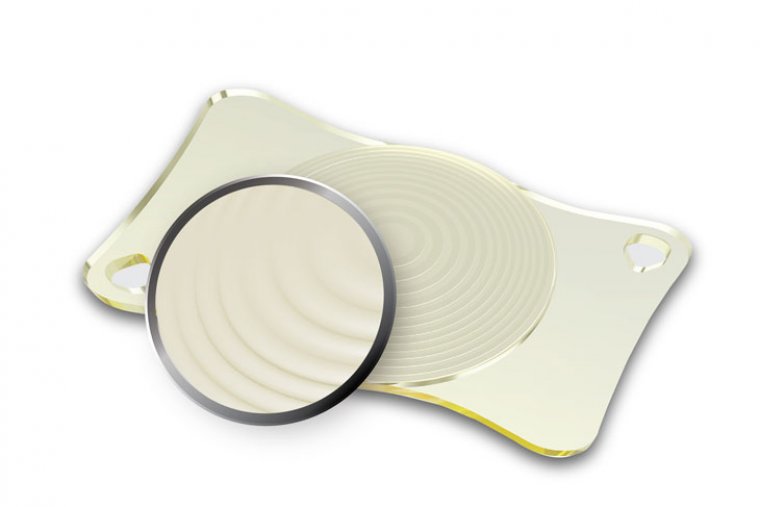
Essilor Stellest lenses feature a clear 9mm central zone, surrounded by concentric rings of tiny lenslets. These peripheral lenslets create peripheral light defocus, a visual cue believed to slow axial elongation, which contributes to myopia progression.
This design enables the lenses to correct vision centrally while simultaneously managing myopia development through peripheral defocus technology, a concept supported by growing clinical evidence in pediatric myopia control.
Clinical Study Results
The FDA’s marketing authorization followed a review of two years of clinical data comparing the performance of Stellest lenses to traditional single-vision lenses. Key findings include:
• 71% reduction in myopia progression (measured by spherical equivalent refraction)
• 53% reduction in eye elongation (axial length)
• No serious adverse events reported
Some children reported mild visual symptoms such as blur and halos, but these were not considered serious. The lenses were generally well-tolerated.
Real-World Adaptation and UV Protection
According to Essilor, when worn for 12 hours per day, Stellest lenses achieved an average of 67% reduction in myopia progression compared to standard single-vision lenses. Additionally, 100% of children in the study adapted to the lenses within one week.
To further support outdoor wear, Stellest lenses are also available in sun tints, providing protection against UV rays and glare.
Regulatory Implications and Special Controls
As part of the De Novo classification, the FDA is establishing special controls covering performance testing and labeling requirements. Once these criteria are met, the agency states that both special and general controls will provide a reasonable assurance of the device’s safety and effectiveness.
Expert Perspective
Dr. Michelle Tarver, MD, PhD, Director of the FDA’s Center for Devices and Radiological Health, commented:
“Today’s authorization brings to market a treatment option that may meaningfully reduce the likelihood of severe eyesight issues later in adult life, while also being easier to use and lower risk than the currently authorized devices that slow the progression of myopia in children.”