(1).jpg)

AI-Enhanced Imaging System from Duke University Offers Faster, Clearer Retinal Cell Visualization
A team of biomedical engineers at Duke University has developed an AI-integrated imaging system capable of visualizing individual retinal cells with greater clarity and speed than existing high-end technologies. The innovation—called Deep-Compressed AOSLO (DCAOSLO)—could significantly enhance early diagnosis and monitoring of a wide range of ocular, neurological, and systemic diseases. The study was published in Science Advances.
The Retina as a Window to Neurological Disease
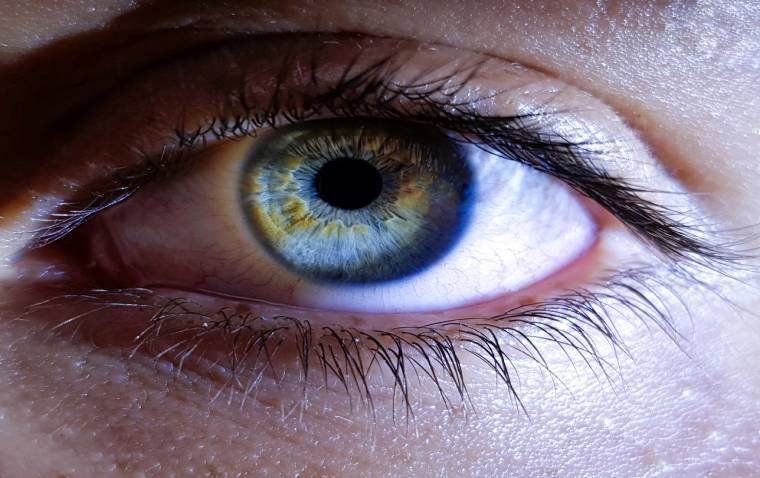
The retina, a thin layer of light-sensitive cells located at the back of the eye, serves as a direct extension of the central nervous system. This makes it a valuable target for noninvasive neuronal imaging, particularly for diseases like Alzheimer’s and multiple sclerosis.
“These retinal cells serve as surrogates for studying diseases of the brain,” said Sina Farsiu, PhD, Anderson-Rupp Professor of Biomedical Engineering and Ophthalmology at Duke. “With clearer images, we can identify diseases earlier and evaluate experimental therapies more effectively than other brain imaging methods.”
Limitations of Conventional AOSLO Technology
The current gold standard for imaging single retinal cells is adaptive optics scanning light ophthalmoscopy (AOSLO), which forms images by capturing light directly reflected from the retina. However, these images can be marred by misleading artifacts. Modern systems use nonconfocal AOSLO techniques, which collect indirectly reflected light to enhance accuracy.
“Nonconfocal AOSLO methods typically employ only two sensors to capture scattered light,” Farsiu explained. “While this gives some insight, it fails to fully capture the shape and integrity of retinal structures. Vertically oriented vessels, for example, may be missed.”
To enhance accuracy, some systems add more sensors or manually adjust sensor positions—a solution that increases cost, complexity, and imaging time, reducing patient comfort and clinical usability.
Deep-Compressed AOSLO: A Faster, Cost-Effective Alternative
To address these issues, the Duke team created Deep-Compressed AOSLO (DCAOSLO), a system that leverages compressed sensing and artificial intelligence to dramatically improve efficiency and imaging precision.
DCAOSLO uses a software-controlled array of tiltable mirrors to redirect scattered retinal light into just two sensors, simulating the effect of twelve. The system then reconstructs detailed images using an AI algorithm trained to approximate the information from a full sensor array.
“DCAOSLO can simultaneously capture scattered light from 12 sensor positions with only two sensors, while significantly reducing cost and imaging time,” said Jongwan Park, PhD student and lead author of the study. “Our hardware modifications are minimal and can be easily integrated into existing AOSLO setups.”
Clinical Potential and Future Applications
The research team tested DCAOSLO on healthy and diseased retinas, successfully imaging rods, cones, and vascular cells with a nearly 100-fold improvement in speed over conventional AOSLO systems.
“Single-cell retinal imaging systems, including AOSLO, will only see widespread clinical adoption if imaging can be performed rapidly, accurately, and cost-effectively,” said Farsiu. “DCAOSLO is a practical diagnostic tool with the potential to transform the management of neurological, cardiovascular, diabetic, and retinal diseases.”
Reference:
Jongwan Park et al, Deep compressed multichannel adaptive optics scanning light ophthalmoscope, Science Advances (2025). DOI: 10.1126/sciadv.adr5912