(1).jpg)
New Handheld Device Enhances Early Detection and Treatment of Amblyopia
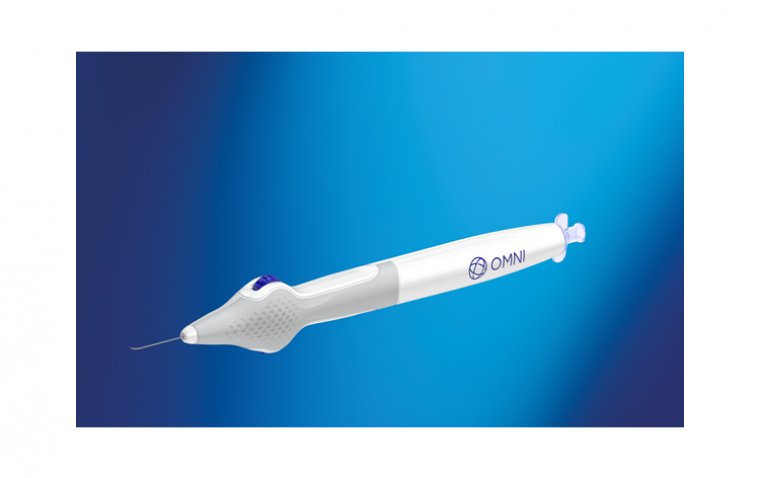
Researchers at the University of Missouri–St. Louis (UMSL) have developed a groundbreaking handheld device designed to improve the early detection and treatment of amblyopia. Utilizing the Quantitative 3 Dot (Q3D) Test, the device provides a more sensitive and quantifiable method for identifying visual suppression, a hallmark of amblyopia.
Development Rooted in Clinical Need
The innovation was led by Carl Bassi, PhD, Curators’ Distinguished Teaching Professor, in collaboration with Michael Howe and Wayne Garver. The idea originated in the early 1990s, when Dr. Bassi was assessing vision in patients with Alzheimer’s disease and noticed limitations in the conventional Worth Four Dot Test, a standard yet qualitative tool for screening binocular function.
“The problem is it's not quantitative,” Bassi explained. “It just gives you this gross kind of yes or no, and you have to have a severe problem before you’re able to pick anything up with that. My idea very early on was to try to change the intensity of these lights independently.”
This vision became feasible only after advancements in LED technology, particularly the emergence of super-bright LEDs, which were essential for accurate implementation of the Q3D method.
Enhanced Diagnostic Sensitivity
The team received a $50,000 FastTrack award in 2014 from the University of Missouri System to develop working prototypes. The Q3D device was initially tested at the UMSL Eye Care Clinic, followed by a clinical trial involving over 300 patients at Cardinal Glennon Children’s Hospital, led by Oscar A. Cruz, MD, and Bradley Davitt, MD.
Results from the trial were compelling:
• Effective in patients as young as 3 years old
• Four times more sensitive than the Worth Four Dot Test in detecting amblyopia-related impairments
These findings highlight Q3D’s potential to identify amblyopia earlier, when interventions are most effective.
Licensing Agreement with Forus Health
The technology has since been licensed by Forus Health, a company committed to equitable and early eye care solutions.
“At Forus Health, our mission has always been to enable early, equitable and impactful eye care,” said K. Chandrasekhar, Founder and CEO. “Licensing the Q3D technology aligns perfectly with that vision. It represents a significant step forward in our ongoing efforts to equip clinicians with cutting-edge tools that enhance diagnostic accuracy and patient outcomes. By bringing a more sensitive and accessible diagnostic tool for amblyopia into the hands of clinicians, we have the opportunity to change the trajectory of vision outcomes for millions of children worldwide.”
Reference:
https://blogs.umsl.edu/news/2025/06/05/carl-bassi-develops-q3d-diagnostic-testing-device-for-early-detection-amblyopia/